Address
Jl. Tebet Timur Dalam Raya No.65, RT.11/RW.7 Jakarta Selatan 12820
Contact Center :
085212689750
Email
hello@8vice.com
Address
Jl. Tebet Timur Dalam Raya No.65, RT.11/RW.7 Jakarta Selatan 12820
Contact Center :
085212689750
Email
hello@8vice.com

 By8vice
When discussions about Indonesia–China economic cooperation arise, attention often gravitates toward trade, manufacturing, infrastructure, or investment. However, one of the most significant developments shaping the future of cross-border commerce is happening in the financial ecosystem.
The growing interoperability between Indonesia’s QRIS (Quick Response Code Indonesian Standard) and international payment systems represents more than a technological upgrade. It reflects a broader effort to simplify cross-border transactions, improve financial connectivity, and support deeper economic integration across Asia.
For businesses exploring expansion between Indonesia and China, this development offers important signals about the direction of regional commerce and digital transformation beyond payment convenience.
Historically, conducting business across borders often involved friction. Currency exchange processes, payment settlement challenges, and varying financial systems created additional complexity for companies and consumers alike.
As digital economies mature, governments and financial institutions are increasingly working to reduce these barriers.
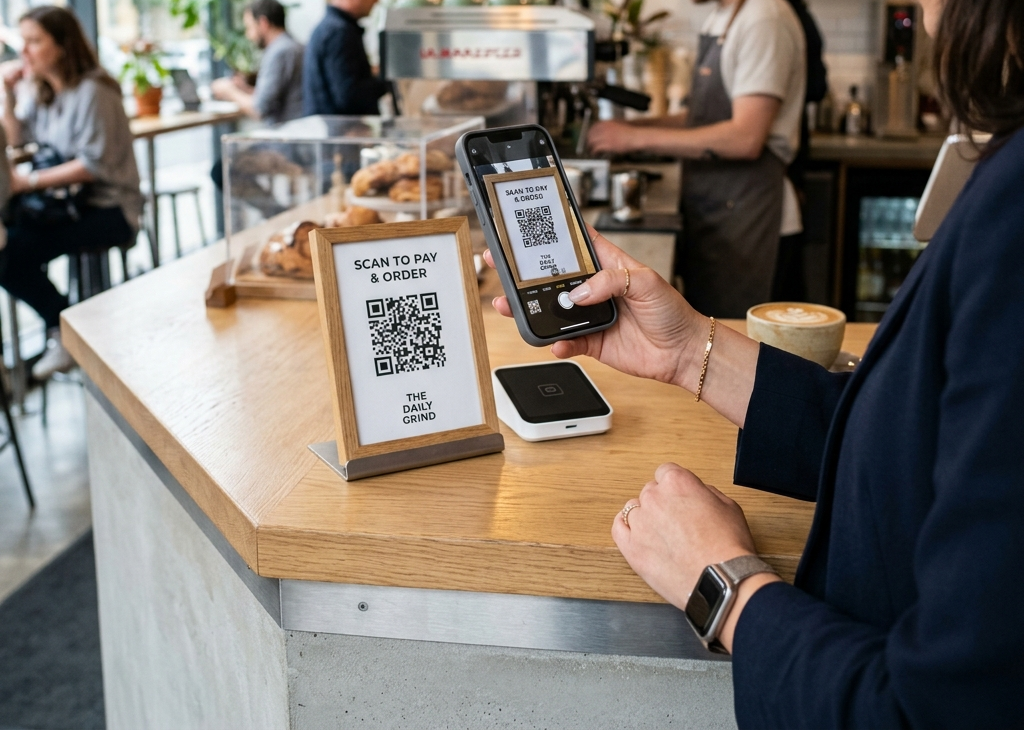
Indonesia’s QRIS initiative was originally designed to unify domestic digital payments into a single national standard. Over time, however, QRIS has evolved into part of a broader vision of regional payment connectivity, enabling seamless transactions between participating countries.
For Chinese businesses entering Indonesia and Indonesian companies expanding into China, such developments contribute to a more efficient commercial environment where transactions can occur faster, more transparently, and with lower operational friction.
Indonesia’s digital economy continues to be one of the fastest-growing in Southeast Asia. Consumers are increasingly comfortable with cashless payments, mobile commerce, and digital financial services.
For Chinese companies accustomed to highly digitalized payment ecosystems, this creates a familiar operating environment.
The expansion of interoperable payment systems helps reduce one of the common barriers faced by foreign businesses: adapting to local transaction preferences while maintaining a smooth customer experience.
Whether operating in retail, tourism, food and beverage, e-commerce, or digital services, businesses that can align with local payment behaviors are often better positioned to accelerate market adoption.
More importantly, payment integration demonstrates Indonesia’s commitment to building a modern and connected digital economy, an encouraging signal for foreign investors evaluating long-term opportunities in the country.
Cross-border payment connectivity is particularly relevant for sectors that rely heavily on consumer spending.
Tourism, hospitality, retail, and lifestyle businesses stand to benefit from reduced transaction friction between visitors and merchants. As travel and business mobility continue to recover and expand across Asia, seamless payment experiences can encourage higher spending and improve customer satisfaction.
For Chinese brands considering expansion into Indonesia, understanding how consumers interact with digital payment platforms is becoming as important as understanding pricing strategies, distribution channels, or marketing approaches.
Payment behavior is increasingly part of market-entry strategy.
Perhaps the most important implication of QRIS cooperation lies beyond payments themselves.
Financial connectivity often serves as an indicator of broader economic integration. As countries establish more efficient frameworks for transactions, trade, investment, and business collaboration tend to follow.
For Indonesia and China, strengthened payment connectivity reflects a shared interest in facilitating economic activity, supporting digital innovation, and creating a more connected business environment.
Companies that view QRIS solely as a payment tool may overlook its broader significance. In reality, it represents part of a larger transformation in how businesses and consumers interact across borders.
While payment interoperability can simplify transactions, successful expansion still depends on a range of factors including regulatory understanding, local partnerships, consumer behavior, market positioning, and stakeholder engagement.
Many businesses identify market opportunities but struggle to navigate the practical realities of entering a new country.
The most successful market entrants are often those that combine market intelligence with local expertise, allowing them to adapt global strategies to local conditions.
As Indonesia and China continue to strengthen economic and digital cooperation, businesses that understand these structural developments will be better positioned to capture emerging opportunities.
The growing integration of digital payment ecosystems signals a new chapter in Indonesia–China economic relations. While QRIS may appear to be a financial innovation, its implications extend far beyond payments.
It reflects the increasing ease with which people, businesses, and capital can move between two of Asia’s most important markets.
For companies evaluating cross-border growth opportunities, the message is clear. The foundations for deeper Indonesia–China business collaboration are becoming stronger, more connected, and increasingly digital. Understanding these shifts today may provide a competitive advantage tomorrow.